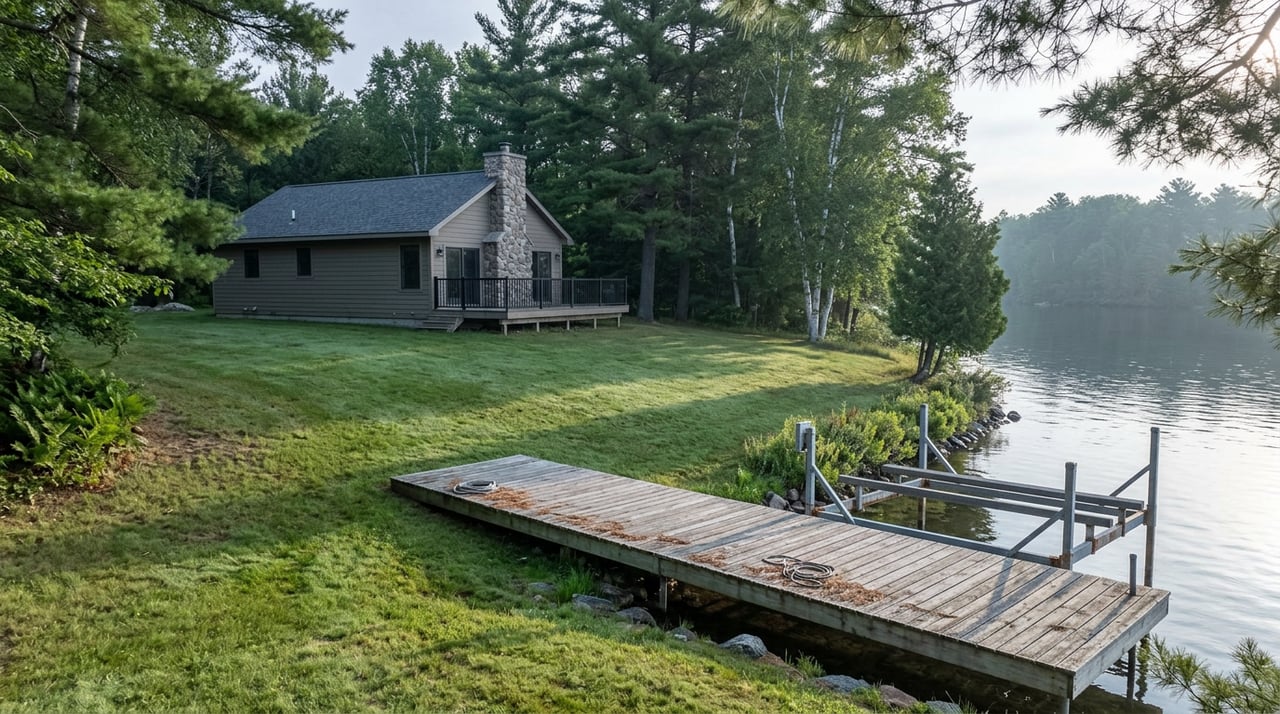
Castle Rock Lake Pier Disclosure Tips for Sellers
September 3, 2026
September 3, 2026
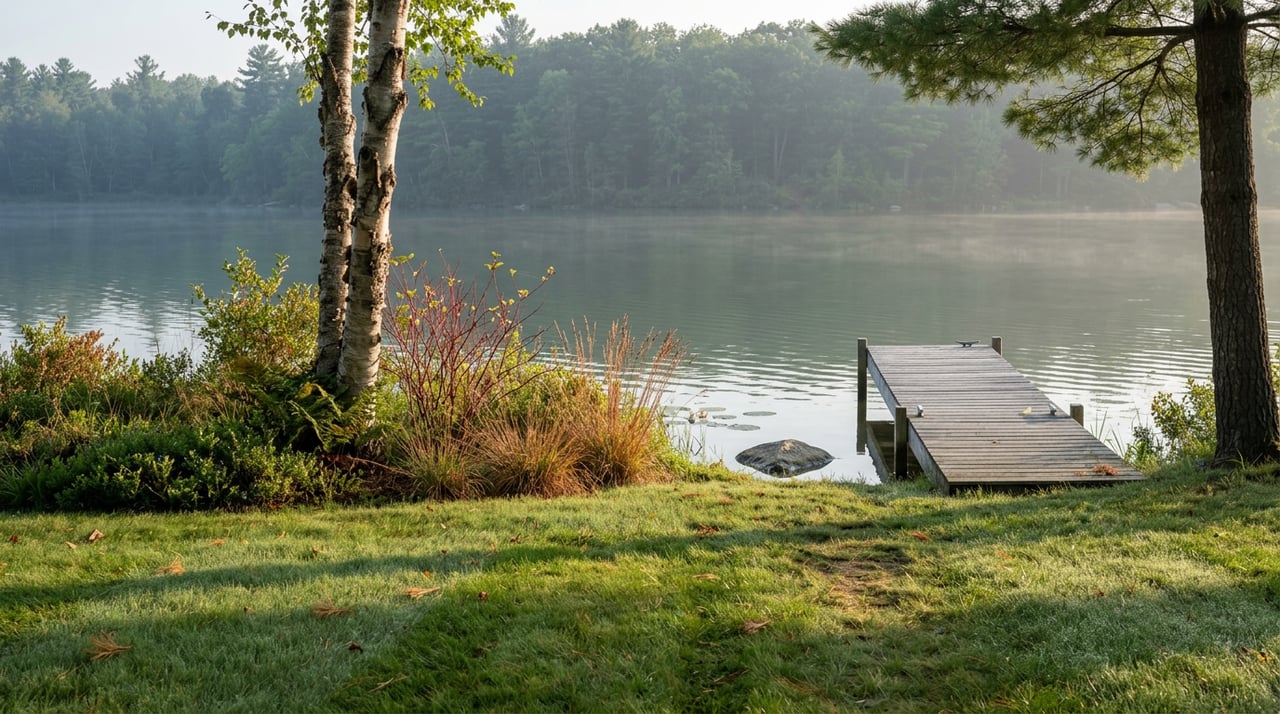
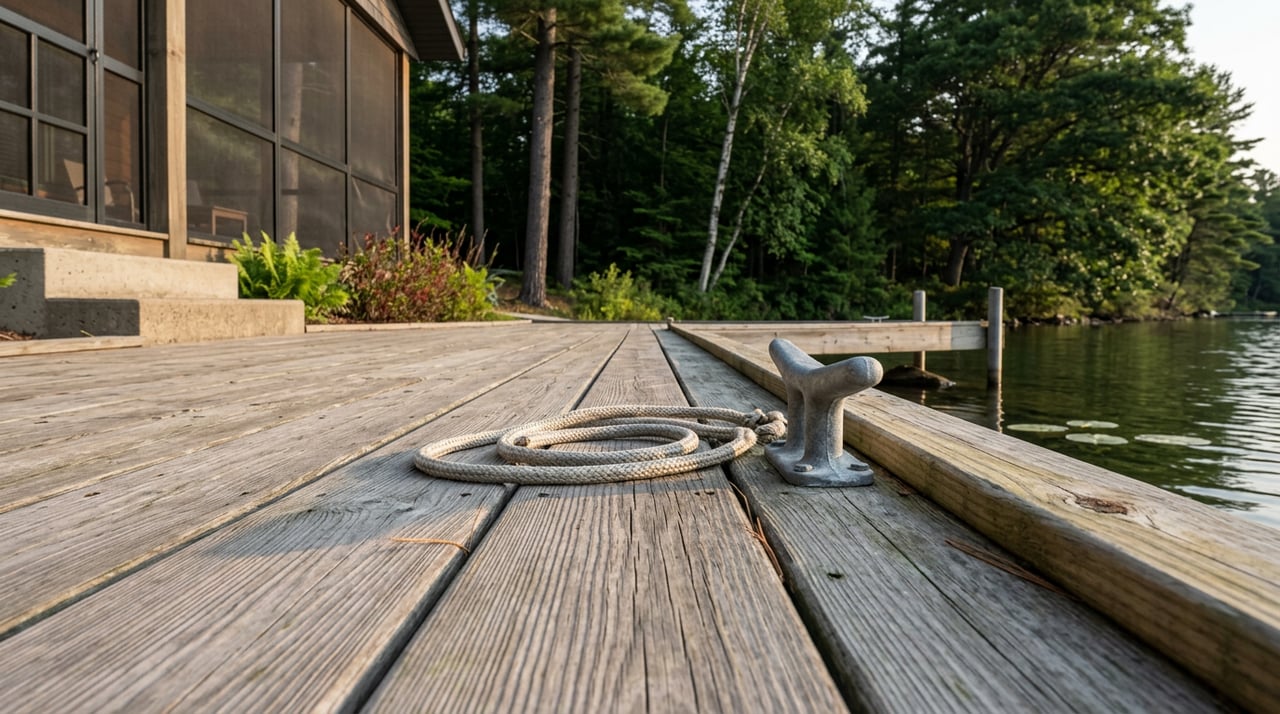
A showing on Castle Rock Lake usually ends the same way. The buyer walks the yard, likes the view, then heads down to the dock and asks the question every waterfront buyer asks: is this pier legal. Most agents answer with a shrug toward the county, maybe a mention of the DNR. On Castle Rock, that answer is incomplete, and the gap between the easy answer and the full one is exactly where a closing can stall.
Castle Rock Lake is not a lake in the way most natural lakes in the area are. It is a flowage, built and maintained behind a dam, and the water sitting in front of that dock answers to an operator before it answers to anyone else. That single fact changes what "waterfront disclosure" means here, and almost nobody explains it to a seller before they list.
Wisconsin River Power Company operates the Castle Rock Dam and describes the water it holds back plainly on its own site, warning boaters and anglers about the size, complexity, and constantly changing conditions of Castle Rock Flowage. That word, flowage, is doing real work. A flowage exists because a private hydroelectric operator built a dam and holds a federal license to manage the water level behind it. The land under the water, and in some cases the rights attached to the shoreline above it, are tied to that license in a way they simply are not on a natural lake.
For a homeowner, this rarely matters day to day. You still swim off your dock, still tie up your pontoon, still watch the water rise in spring and fall through the season. It starts to matter the moment you try to sell, because Wisconsin's disclosure paperwork has a place reserved for exactly this kind of property, and the DNR checklist most sellers assume covers everything does not.
Every seller of a one to four unit residential property in Wisconsin has to complete a Real Estate Condition Report under Chapter 709 of the state statutes. It is a known-defects form, not a warranty, and it has to reach the buyer within a set window after the offer is accepted.
Buried in the waterfront section of that report is a line the Wisconsin Realtors Association added specifically for lake sellers, asking whether the owner is aware of a pier attached to the property that is not in compliance with state or local pier regulations. The association added it because an out-of-compliance pier is not just a maintenance issue. It can trigger a DNR enforcement action, and a buyer who finds that out after closing has grounds to be upset.
Compliance for a pier usually comes down to one date. The DNR treats a pier as a legacy structure, exempt from needing a new state permit, if it was first placed in the water before April 17, 2012, and its footprint has not changed since. Piers placed after that date, or ones that have been widened, extended, or rebuilt with more slips, generally need to meet the DNR's current exemption checklist or carry an individual permit. Most sellers can answer the RECR's pier question correctly once they know which side of that date their dock falls on.
"aware of a pier attached to the property that is not in compliance with state or local pier regulations"
That is the actual question on the form. On a natural lake, answering it usually means checking a placement date against DNR records and moving on. On Castle Rock, there is a second question hiding behind the first one, and the state disclosure form never asks it directly.
Wisconsin statute 30.133 covers piers and other structures on waters that sit within a licensed hydroelectric project, and Castle Rock Flowage is exactly that kind of water. Under this section, a riparian owner on a project water has to make written application to the hydroelectric operator, in this case Wisconsin River Power Company, for permission to place or modify a pier or other structure. The operator then has 60 days to approve or deny the request.
That approval sits entirely outside the DNR's pier planner process. A pier can meet every DNR exemption standard and still need a sign-off from the dam operator, because the operator's authority comes from its federal license, not from state waterway law. Sellers rarely know to ask for this, buyers rarely know to ask for it either, and it tends to surface only when a title company or an attentive buyer's attorney starts asking who actually controls the water level in front of the house.
The 2021 update to state law, found in Wis. Stat. 30.132, helps sellers here more than it complicates things. It restores a presumption of riparian rights for waterfront owners, including the right to place a pier, unless a deed, written agreement, or other recorded document specifically takes that right away. Existing piers and structures are grandfathered under this law, and the operator cannot charge a fee for exercising that right unless the fee is built into its federal license. If a fee dispute does come up, it can be appealed to the state Public Service Commission.
Put together, the two layers on Castle Rock work like this:
Most closings on Castle Rock never touch the second question, because most piers have sat unchanged for years and nobody has reason to ask. The transactions where it surfaces are the ones with a newer dock, a rebuilt lift, or a seller who genuinely does not know when the structure went in.
If a seller submits a Real Estate Condition Report that later needs a correction, the buyer gets a short window, generally two business days after receiving the corrected report, to walk away from the deal. That is not a reason to panic about a pier question. It is a reason to answer it accurately the first time, before an offer is on the table, rather than scrambling to amend a disclosure once a buyer's attorney has already flagged it.
A short list worth working through before listing a Castle Rock Lake home with a pier or lift:
A pier on a natural lake answers to the DNR and, in some cases, a local pierhead ordinance. That is the full picture. A pier on Castle Rock answers to the DNR and to a licensed hydroelectric operator, because the water itself exists under a federal license rather than as an unaltered natural resource. It is a small distinction with an outsized effect on how smoothly a waterfront closing goes, and it is specific to project waters like this flowage rather than something that applies uniformly across every lake in the region.
Does this apply if my pier hasn't changed in decades? Likely not in any way that slows a sale. A pier placed before April 17, 2012 with an unchanged footprint generally qualifies as a DNR legacy structure, and if it has never needed operator approval before, a routine sale is unlikely to trigger one now.
What if I genuinely don't know when the pier went in? Say so on the disclosure form rather than guessing. The RECR asks about known defects, not certainty you don't have, and an honest "unknown" protects you far more than an inaccurate date would.
Who do I actually call to check? Wisconsin River Power Company's Castle Rock page lists a contact line for flowage-related questions, and the DNR's waterways program handles state permit and exemption questions separately. Knowing which one to call, and when, is most of the battle.
None of this makes selling a pier-front home on Castle Rock Lake complicated. It makes it worth five minutes of homework before the sign goes in the yard, so the only surprises left at closing are the good kind.
If you're weighing a sale on Castle Rock Lake, or trying to figure out what your waterfront actually includes before you buy, Seth Tully has spent his career sorting exactly this kind of local detail out for Juneau County sellers and buyers. Request your free home valuation and get the full picture before you list.
Stay up to date on the latest real estate trends.
Whether helping sellers maximize their home’s value or guiding buyers to the right place to call home, Seth is committed to providing thoughtful, hardworking service that supports a lifestyle to enjoy in every season.