Rural Septic Wells in Juneau County: What to Review
May 7, 2026
May 7, 2026
Buying or selling a rural property in Juneau County can feel simple on the surface until questions about the well and septic system start coming up. If you are looking at a farmhouse, build site, hobby-farm property, or home outside city utilities, these systems matter in a big way. The good news is that private wells and septic systems are common here, and once you know what to ask for, the process gets much more manageable. Let’s dive in.
In Juneau County, many rural homes and subdivisions rely on private wells and private onsite wastewater treatment systems instead of city water and sewer. County land and water planning documents note that this is a normal pattern in the area, especially outside incorporated communities with municipal treatment plants.
That same local planning work also points to a few ongoing concerns, including failing septic systems, improperly abandoned wells and cisterns, and nitrate found in private well tests. For buyers and sellers, that means records, maintenance, and property due diligence carry extra weight in a rural transaction.
A private well is generally a groundwater source that serves fewer than 15 connections and fewer than 25 people. In practical terms, that usually means one home, farmhouse, or rural property.
With a private well, the owner is responsible for maintenance and protection. Wisconsin health guidance says that includes keeping the area clean, making sure the ground slopes away from the well, and keeping the cap in good condition.
One of the most important things to understand is that well water can appear normal and still need testing. Some contaminants do not affect the color, smell, or taste of the water, so you cannot rely on appearance alone.
Wisconsin guidance recommends annual testing for bacteria and nitrate in private wells. The state also recommends periodic review for other concerns, including arsenic and lead, with a five-year testing interval often used as a practical benchmark for many households.
If the water changes in taste, color, or smell, or if the well has been flooded, testing should happen right away. Waiting for the next routine test is not the safest approach in those situations.
When you are touring a rural property in Juneau County, ask for the well construction report or well record. That document can show details like drillhole depth and casing depth, which help you understand the system better.
You should also ask for the date and results of the most recent water test and whether the sample was processed by a Wisconsin certified lab. If the home has treatment equipment, ask for service records too, since keeping records of testing and well work is part of responsible ownership.
It is also smart to ask whether the property has any unused wells, abandoned wells, or old cisterns. That matters in Juneau County because local planning documents identify improperly abandoned wells and cisterns as a concern.
Sometimes an older rural property does not come with a tidy file of well records. If a well construction report cannot be located, Wisconsin DNR says a licensed well professional may be able to inspect the system and measure the depth.
That does not replace every historic record, but it can help fill in important gaps. For buyers looking at older homes, cabins, or long-held family properties, this can be especially useful.
Wisconsin does not require a well inspection or water test every time a property is sold. Still, many buyers and sellers choose to have one done as part of the transaction.
If that inspection is ordered, it must be completed by a licensed water well driller or a licensed pump installer. The inspection typically includes a visual review of the well and pressure system, a search for noncomplying features, a check for unused wells, and water sampling for bacteria, nitrate, and arsenic.
It is important to know what this type of inspection does not cover. It does not address the home’s interior plumbing distribution system or electrical code items.
If a problem is found, the well does not automatically have to be brought into compliance in order for the property to be sold. In many cases, what happens next becomes part of the buyer and seller negotiation, and a lender may also have its own requirements.
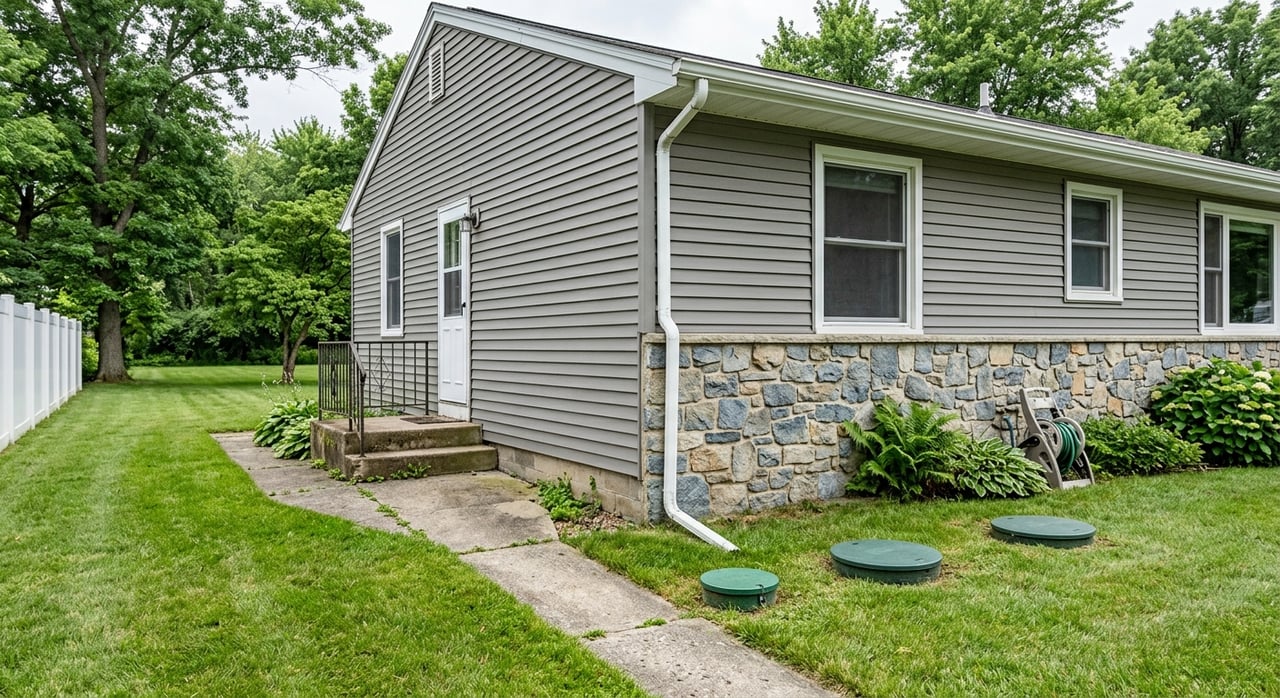
In rural Juneau County, many properties use a private onsite wastewater treatment system, often called a POWTS. In county code, a conventional private sewage system is described as a septic tank paired with an in-ground soil absorption component using gravity or dosed distribution.
The county ordinance applies in areas that are not served by public sewer approved by the DNR. That is why septic systems are such a common part of rural homeownership here.
Juneau County requires a sanitary permit before a private sewage system is installed, replaced, reconnected, or modified. The permit application must include a plot plan showing the system and nearby site features such as buildings, wells, lot lines, water services, and surface waters.
Depending on the property, the county may also require floodplain or wetland delineation before issuing the permit. That is one reason rural lots and vacant land can require more upfront review than properties already served by public utilities.
If a septic system has failed or needs modification, the county requires the full system to be evaluated for code compliance before a permit is issued. For reconnection work, written reports from qualified professionals may also be required.
On certain rural parcels, septic systems can become more complex than buyers expect. If a system crosses parcel lines or serves more than one structure, Juneau County may require recorded easements, combined-parcel affidavits, ownership and maintenance agreements, or deed restrictions in some situations.
That makes title review and document review especially important for older farm properties, hobby-farm setups, or land with multiple structures. It is not just about where the tank sits. It is also about what rights and obligations stay with the property.
A septic system is not a set-it-and-forget-it feature. Wisconsin DNR guidance recommends having the system inspected every 2 to 3 years and pumping the tank when it is about one-third full of sludge and scum.
The same guidance also recommends avoiding excessive bleach and harsh chemicals, and not pouring items like paint thinner, pesticides, or degreasers down the drain. Those habits can affect how the system performs over time.
In Juneau County, septic-tank pumping must be performed by a certified septage-servicing operator. The county ordinance also allows certain licensed professionals or county and state employees to perform visual inspections to help determine tank condition and whether wastewater is surfacing on the ground.
If you are considering a home with septic, ask for the date of the last pumpout and any service receipt. You should also request repair records, replacement history, maintenance documents, and any maintenance agreement if one applies to the system.
Ask what type of system is in place and whether the seller knows of any past failures or modifications. It is also wise to ask about warning signs such as backups, odors, wet spots, or surfacing effluent near the tank or drainfield.
Finally, ask whether the septic system is tied to any easements, shared ownership terms, or other recorded agreements. On some rural properties, those details can be just as important as the physical condition of the system itself.
Flooding can affect both wells and septic systems. If a well has been flooded, the water should be tested right away rather than waiting for an annual testing schedule.
For septic systems, Wisconsin health guidance says flooded private sewage systems are no longer reliable. Homeowners are advised to use portable toilets or other facilities and contact the local zoning office, code administrator, or sanitary inspection office before using the system again.
Flooding can also lead to sewage backing up through floor drains and toilets. If a property has low-lying areas or a history of flooding, that should be part of your due diligence before closing.
If you are buying vacant land in Juneau County with plans to build, well and septic questions should come up early. A future home site may look perfect, but utility planning is still a big part of whether the project fits your goals.
For a new private well in Wisconsin, advance notice must be given to the DNR before construction, and a notification number is required before work begins. After construction, a Well Construction Report must be completed within 30 days.
On the septic side, county permit requirements, plot plans, and possible site constraints such as wetlands or floodplain review can all affect timing. For land buyers, that means utility due diligence should happen before you get too far down the road.
If you want a simple way to stay organized, start with this checklist:
Rural properties in Juneau County often offer space, privacy, and flexibility that many buyers are looking for. They can also come with more moving parts than a home connected to city utilities.
That does not mean you should be nervous about buying or selling one. It just means the process works best when you know which records to request, which questions to ask, and which local rules may affect the property.
If you are considering a rural home, vacant lot, lake-area retreat, or acreage in Juneau County, having steady local guidance can make the process a lot clearer. When you are ready to talk through the details of a property or plan your next move, connect with Seth Tully.
Stay up to date on the latest real estate trends.
Whether helping sellers maximize their home’s value or guiding buyers to the right place to call home, Seth is committed to providing thoughtful, hardworking service that supports a lifestyle to enjoy in every season.