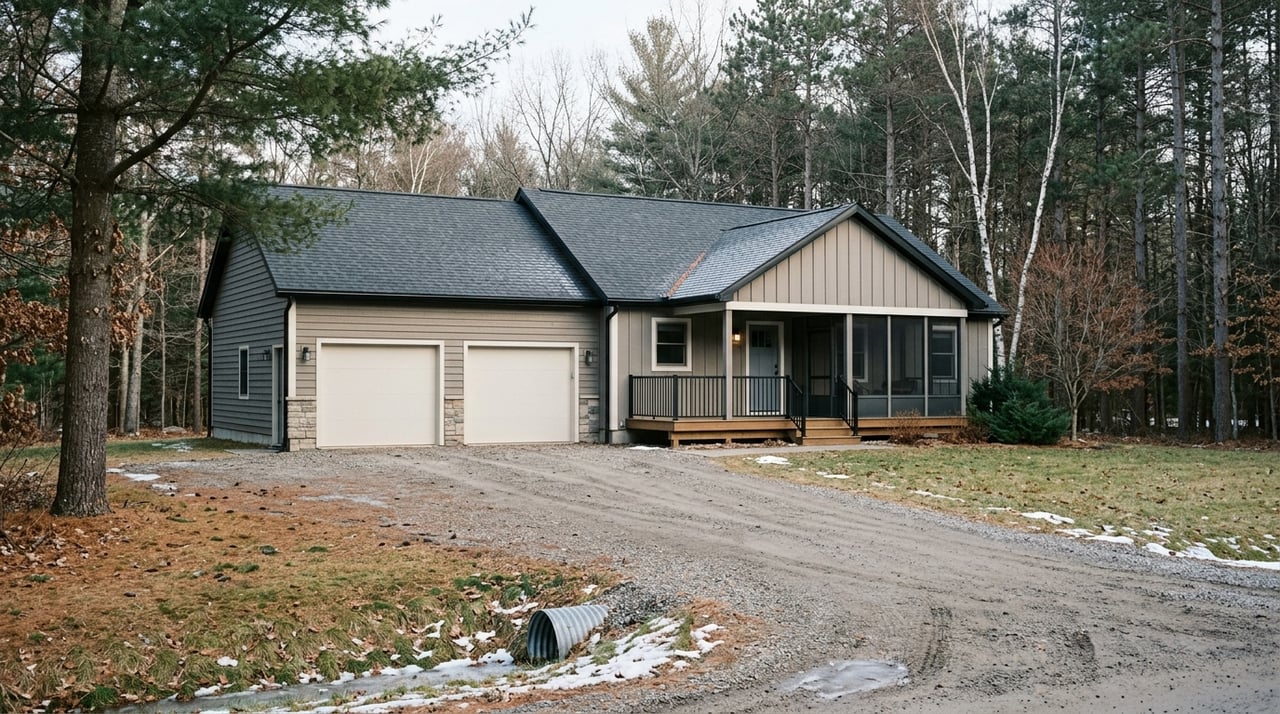
Planning A Rural Build In Adams County
June 11, 2026
June 11, 2026
If you are thinking about building on rural land in Adams County, the biggest mistake is assuming a vacant parcel is automatically ready for a home. In reality, a successful build usually depends on several pieces lining up at the same time, from zoning and road access to septic, water, and environmental constraints. The good news is that you can avoid expensive surprises by checking the right items in the right order. Let’s dive in.
Before you sketch floor plans or clear trees, make sure the parcel works on paper. Adams County Planning & Zoning provides access to parcel maps, plats of survey, land records, online permit applications, and staff contacts for zoning, setbacks, sanitary permits, and floodplain questions.
The county GIS tools are especially useful at the beginning. They can help you review parcel boundaries, zoning, roadway data, addresses, and right-of-way information so you can start with a realistic picture of the site.
A simple truth matters here: not every rural parcel is buildable in the same way. Buildability can depend on zoning, setbacks, access, wastewater options, shoreland rules, wetlands, and floodplain location.
In Adams County, the permit process is not exactly the same everywhere. The county directs applicants by township, and the required path can vary depending on where the parcel sits.
For many townships, a stick-built home follows the county’s New Home Building Packet. A manufactured home follows the Manufactured Home Packet. Even smaller accessory structures may still need to meet setback and height rules, even when a permit is not required.
One key exception is Big Flats. Adams County notes that some structures outside shoreland distances may not need a county zoning permit there, but you still need to contact the Town of Big Flats zoning administrator.
If your parcel is in Adams, Colburn, Dell Prairie, New Chester, New Haven, Preston, or Richfield, farmland preservation zoning may also affect what is allowed or how the project is reviewed. That is another reason to confirm the zoning path early instead of relying on assumptions.
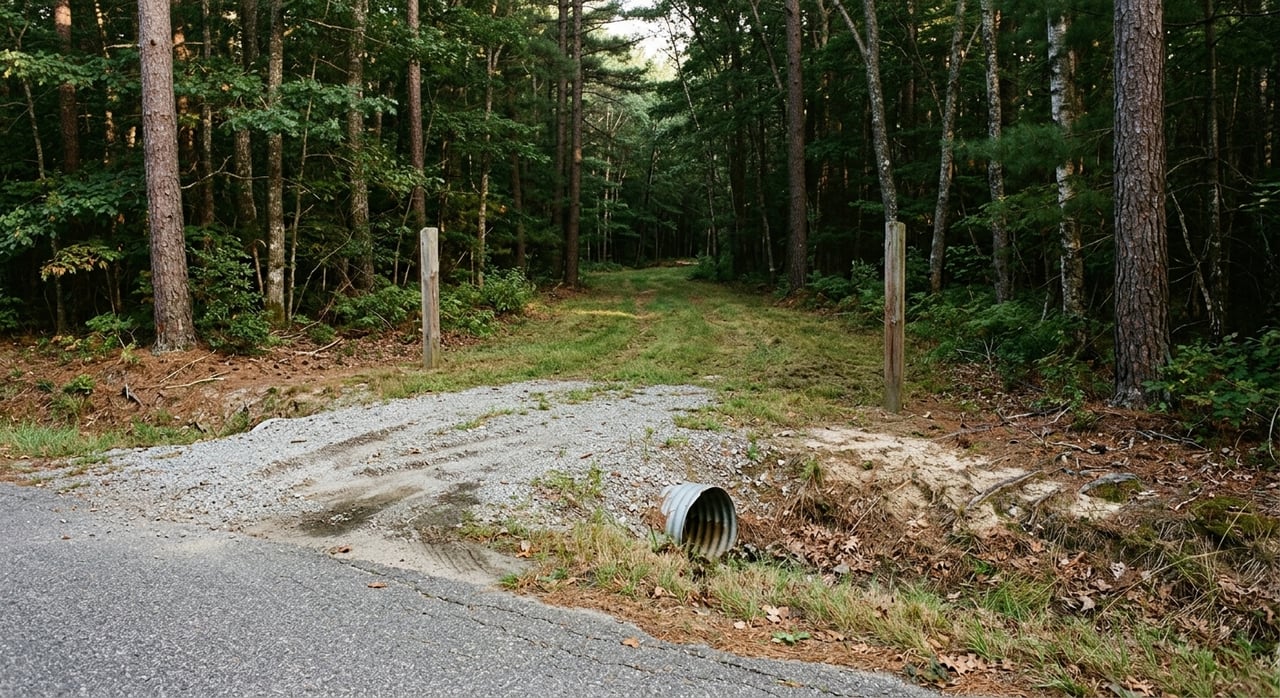
A homesite is only practical if you can legally and safely access it. In Adams County, the Highway Department requires a permit for any driveway from county highway right-of-way, and it inspects applications before making a decision.
The current county fees listed online include a $35 driveway permit fee, a $35 driveway-alteration permit fee, and a $500 after-the-fact fee. Surface maintenance does not need a permit, but new access and changes to an existing access do.
This step matters more than many buyers expect. If a driveway location is limited by sight lines, drainage, or right-of-way issues, that can affect where you place the home, garage, and utilities.
Addressing should also happen early in your due diligence. Adams County says properties on a state highway must first receive Wisconsin DOT approval before applying to the county for addressing.
If the parcel is on a county road, Highway Department approval comes first before filing with the county treasurer. The county also notes that some towns have their own address or fire-number policies, so the process can vary depending on frontage and local rules.
This may sound minor, but it is part of making sure your project can move forward smoothly. It is easier to coordinate access, permits, and utility planning when addressing is handled upfront.
One of the most important parts of planning a rural build is confirming utility reality, not utility assumptions. Adams County lists electric providers such as Adams-Columbia Electric Cooperative and Alliant Energy, natural gas through We Energies, and phone and internet providers including Frontier, Charter, and Marquette-Adams Telephone Cooperative.
That said, service availability still needs to be verified for the specific parcel. Line extension costs, service territory boundaries, and connection logistics can all change your budget.
If utility work will take place in county right-of-way, the Highway Department also has a utility application and right-of-way ordinance. In many cases, access and utility planning should be reviewed together rather than as separate items.
Many rural Adams County builds depend on a private well. In Wisconsin, private wells are the homeowner’s responsibility, and the Wisconsin DNR requires advance notice before a new private well is constructed.
New wells must be built by a licensed well professional, and a well construction report must be submitted after the work is complete. If a parcel already has a well, the DNR well records search can provide useful details such as depth, geology, yield, and construction history.
Wisconsin DNR and DHS recommend testing private well water for bacteria and nitrate at least once a year. Adams County also supports this with its own well-testing program and educational materials.
Old wells deserve attention too. The county warns that unused wells can threaten groundwater, and the DNR requires abandoned or unused wells to be filled and sealed by a licensed well driller or pump installer.
Septic planning should happen before you get too attached to a home design. Wisconsin DSPS regulates private onsite wastewater treatment systems, and counties or local units handle plan review for certain installations.
For larger POWTS projects, joint DNR and DSPS review may be required along with a county sanitary permit. Adams County Planning & Zoning also provides staff contacts for sanitary permit status and failed or failing septic systems, which shows how central wastewater planning is in a rural build.
In practical terms, this means your parcel needs a workable wastewater solution before your plans truly make sense. A house layout, bedroom count, and site design may all be affected by septic feasibility.
If the parcel is near a lake, pond, flowage, or stream, shoreland zoning can shape what you can do. In Wisconsin, the shoreland zone generally applies within 1,000 feet of a lake, pond, or flowage, or within 300 feet of a stream, or to the landward side of the floodplain, whichever is greater.
Statewide minimum standards generally require structures to be set back at least 75 feet from the ordinary high-water mark. Vegetation clearing is also limited in the first 35 feet inland unless an exception applies.
For work above the ordinary high-water mark, local government is usually your first point of contact. For in-water work below the ordinary high-water mark, the DNR handles permitting.
Floodplain review is another major checkpoint in Adams County. The county participates in the National Flood Insurance Program and the Community Rating System, and that participation can help reduce flood insurance premiums in some cases.
The county also notes that flood insurance may be mandatory if you build in a floodplain and use a federally regulated or insured loan. Under state floodplain rules, local officials are responsible for identifying mapped floodplain areas and issuing floodplain development permits.
This is why parcel screening matters so much before closing. A lot may look attractive on a map, but floodplain status can affect placement, cost, insurance, and the approval path.
Wetlands need their own review because they can affect building areas, driveways, and clearing plans. The Wisconsin DNR says wetland fill, excavation, and mechanized clearing may require a permit.
The state wetland viewer is the recommended tool for early screening before design work moves forward. Even if wetlands do not make a project impossible, they can reshape where you place improvements on the site.
For buyers looking at heavily wooded or low-lying land, this step is especially important. It can save time, money, and frustration later.
Larger projects may trigger stormwater review. The Wisconsin DNR says most construction sites that disturb one acre or more need construction-site stormwater permit coverage through a Notice of Intent.
Adams County also has its own stormwater runoff ordinance with permit, amendment, and technical-exemption fees. The county encourages a site visit with Land & Water Conservation staff, which can help reduce duplication and speed up review.
If you are planning a long driveway, larger clearing area, or a broad building envelope, this is worth checking early. Stormwater is often easier to address before site work begins than after plans are finalized.
If you want a practical way to evaluate rural land, use this sequence:
This checklist approach fits how Adams County and Wisconsin agencies organize the process. It also helps you make better land-buying decisions before design costs start to add up.
For buyers, this process can help you avoid purchasing land that looks promising but comes with hidden limits. For sellers, understanding these factors can make your property easier to market because buyers tend to respond well when access, zoning path, and utility details are clearer from the start.
That is especially true in a regional market where vacant land, recreational parcels, and future build sites attract both local and out-of-area interest. Clear information builds trust and helps everyone move forward with fewer surprises.
If you are weighing a land purchase or preparing to sell a rural parcel in Adams County or the surrounding area, working with someone who understands land questions can make the process feel much more manageable. When you are ready for local guidance on land, homes, and rural property strategy, connect with Seth Tully.
Stay up to date on the latest real estate trends.
Whether helping sellers maximize their home’s value or guiding buyers to the right place to call home, Seth is committed to providing thoughtful, hardworking service that supports a lifestyle to enjoy in every season.